Finding a flat in Bern: where to look, what to watch out for
Hardly any flats are free in the city of Bern. Wohnung finden sums up where you can look, what goes in your application file and what rights you have.

How it works
- Open “Where to look” (Wo suchen): housing cooperatives, city-owned flats, portals, subletting and notices in the neighbourhood.
- Put together your application file, with an extract from the debt enforcement register (Betreibungsregisterauszug) that is no more than three months old.
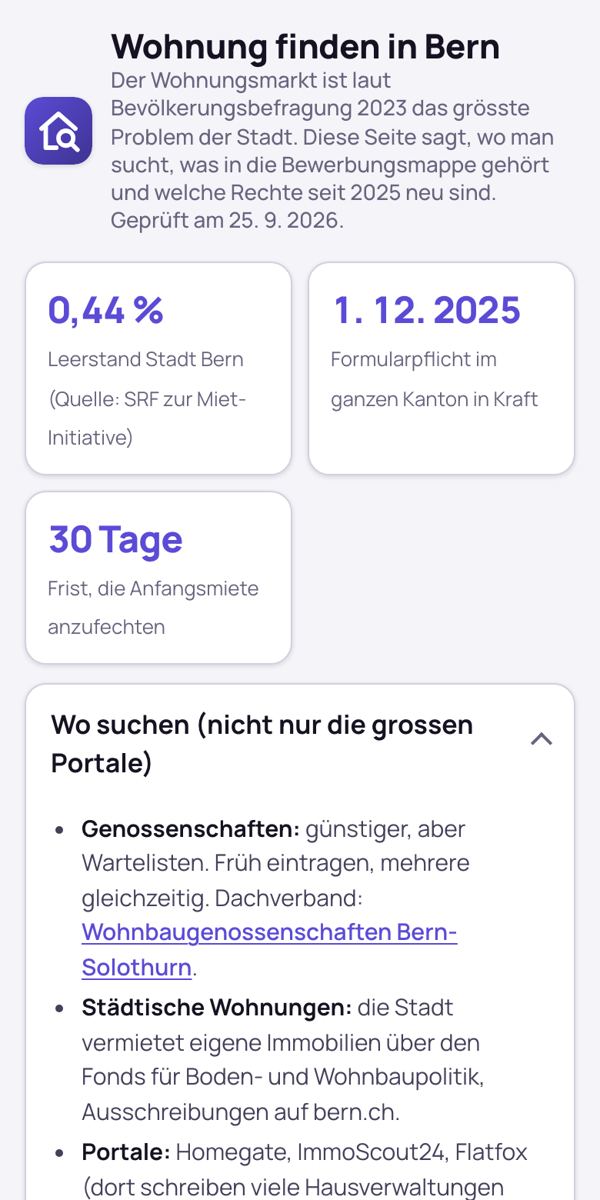
- When you move in, check the official form showing the previous rent. You have 30 days to challenge it.
Why it is tight
According to SRF, the vacancy rate in the city of Bern is 0.44%. So look in several places at once: housing cooperatives (Genossenschaften), city-owned flats, portals such as Homegate, ImmoScout24 and Flatfox, subletting and flat shares (WG) and notices in the neighbourhood.
Keep your file ready so you can react quickly. It holds the application form, the extract from the debt enforcement register, a copy of your ID or residence permit, your salary statement or employment contract and a short, honest cover letter.
What is new since 2025
Since 1. 12. 2025, landlords must disclose the previous rent on the official form every time a flat is re-let. If the initial rent is too high, you can challenge it with the conciliation authority (Schlichtungsbehörde) within 30 days of taking over the flat. The day the keys are handed over is what counts. The page also explains the handover report and the rent deposit and says where to get help, for example with a notice to quit or discrimination.
Where the information comes from
From the Canton of Bern, the tenants' association (Mieterinnen- und Mieterverband) and the city of Bern. Practical tips are marked as such. Figures and deadlines were checked on 25. 9. 2026. The page is not legal advice.
Also worth reading
Neu in BernToolGratis HilfeToolDeutsch lernenToolText: Richard Červenka, Bärn Kit. Found a mistake? Write to hallo@uebrig.ch.