Saving food in Bern: public fridges, foodsharing and support services
In Bern, good food does not have to end up in the bin: there are public fridges, groups that rescue food, and places where people with little money can eat cheaply. Here is who does what and how you can take part.
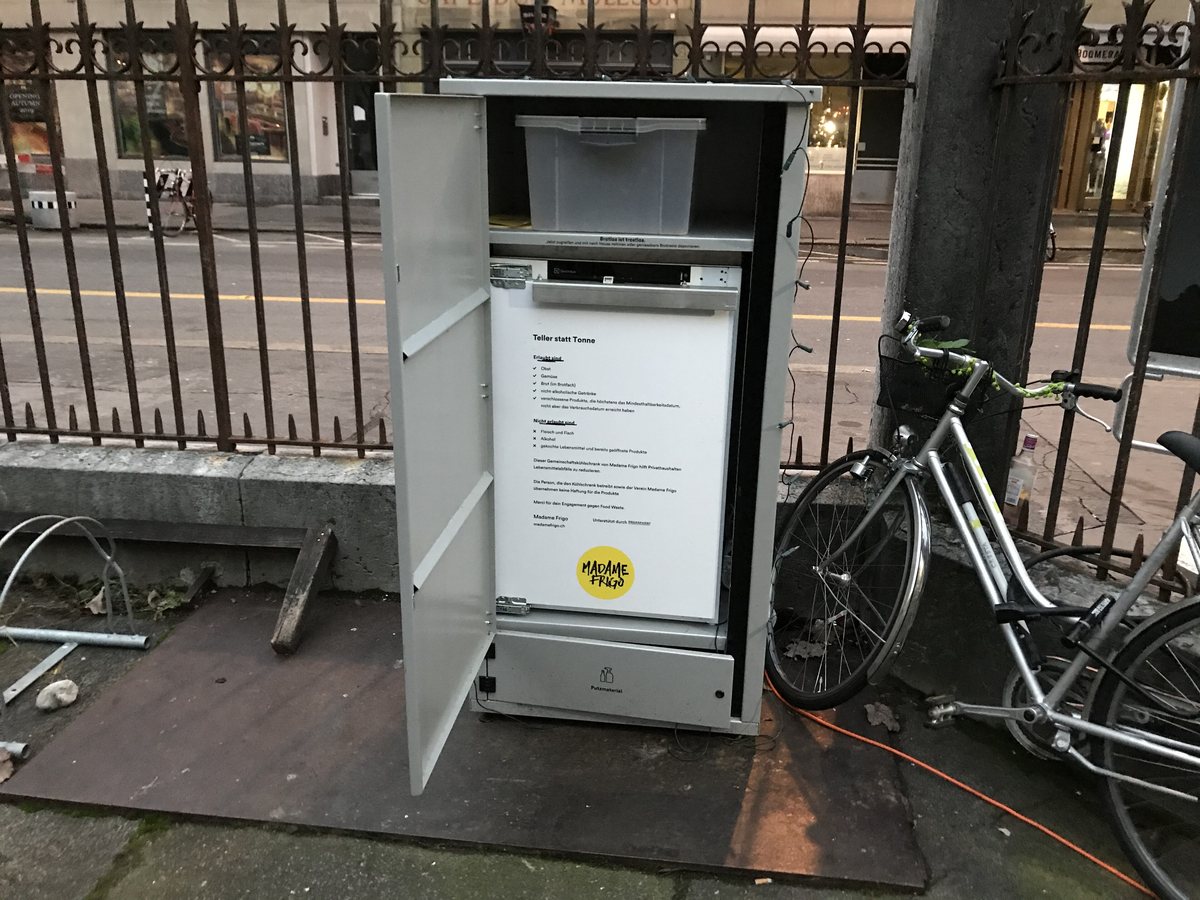

In short: According to Madame Frigo, there are 14 public fridges in the city of Bern where anyone may put food in and take food out. foodsharing Bern has collected surplus food from businesses since 2014 and calls these fridges “Fairteiler” (sharing points). If you have little money, Tischlein deck dich gives you food once a week for a symbolic franc, with a customer card.
Collect, share or donate?
Not every offer is meant for everyone. The public fridges and the Äss-Bar are open to all. Tischlein deck dich is for people in financial hardship. The Schweizer Tafel only supplies institutions. If you need food, use the offers directly. If you work in a kitchen and want to pass on cooked dishes, call the organisation first. The checklist for restaurants and canteens shows how.
Madame Frigo: public fridges
The association Madame Frigo runs fridges in publicly accessible places. Anyone may put food in and take food out. On the Madame Frigo location map there were 14 fridges in the City of Bern on 14 October 2026, for example in the Berner Generationenhaus on Bahnhofplatz, in the courtyard of the PROGR, at the Länggasse library and at Café Mondial in Bethlehem.
The Madame Frigo rules:
- Allowed: fruit, vegetables and bread. Also sealed products that have at most reached their best-before date, but not their use-by date.
- Not allowed: meat, fish, alcohol and products that are already opened or processed, for example cooked dishes.
- Volunteers from the neighbourhood clean the fridge and regularly check what is inside. You leave it clean.
- You use the fridge at your own risk.
You can help as a volunteer at an existing fridge; Madame Frigo asks you to send a message through its contact form. The article “best before” or “use by” explains what the two dates on the pack mean.
foodsharing Bern: Fairteiler and foodsavers
According to its regional page, foodsharing Bern has been working against food waste since 2014. Foodsavers collect surplus food from partner businesses. Public sharing points are called “Fairteiler” at foodsharing. In Bern, these are mainly the Madame Frigo fridges on the map, such as the Fairteiler outside LOLA in the Lorraine. The two lists can differ; for the fridges, trust the Madame Frigo page.
How to become a foodsaver: register on the platform, take the quiz and join the Bern district. The welcome team will then get in touch. Businesses with surplus food can write to bern@foodsharing.network.
Tischlein deck dich: food with a customer card
Tischlein deck dich (“table, set yourself”) gives rescued food to people in financial hardship. You need a customer card (Kundenkarte). You apply at a social counselling office (Sozialfachstelle), which first checks whether you need support. After a positive decision, the card arrives by post. It is valid for one year for one person or one household. With it, you collect food once a week at your distribution point. Bring the card, a symbolic franc and cool and carrier bags.
The Tischlein deck dich map shows distribution points in the City of Bern, for example at the Paulus parish, St. Marien church and the Bethlehem parish, and in nearby municipalities such as Ostermundigen, Zollikofen, Liebefeld and Worb. The map also shows which counselling office issues cards for which distribution point.
Schweizer Tafel: food for institutions
The Schweizer Tafel (Swiss food bank) collects surplus but perfectly good food from retailers and producers. Refrigerated vans bring it to more than 500 social institutions across Switzerland, for example soup kitchens, emergency shelters and women's refuges. Private individuals do not receive food directly, and the Schweizer Tafel does not collect food from private individuals either. It suggests taking long-life products to a social institution yourself. Near Bern, the Mittelland regional team in Kehrsatz does this work. Volunteers can help on the rounds.
Sleeper and Passantenheim: a meal and a bed
The association Sleeper has run a night shelter and a street kitchen (Gassenküche) at Neubrückstrasse 19 since 1980. The street kitchen cooks for everyone every evening from 18:00 to 20:00, and a meal costs CHF 5. Nobody has to give information or show ID. The kitchen receives much of its food free of charge from the Schweizer Tafel and from local shops.
The Passantenheim of the Salvation Army at Muristrasse 6 offers homeless people temporary accommodation with breakfast. In an emergency, you can also arrive at night.
Äss-Bar Bern: yesterday's bakery goods
The Äss-Bar Bern at Marktgasse 19 sells bread and baked goods from the previous day. The idea started in 2013: yesterday's bakery goods should be eaten rather than thrown away. The shop is closed on Sundays.
Cheap meals today: the Bärn Kit tool
The tool Günstig essen heute (cheap meals today) shows, day by day, where in Bern you can eat for free or for a few francs: street kitchen, lunch tables, Sunday dinner. Each card gives the time, price, who the offer is for and the address. With “Free only” you hide everything that costs money. Further down, it lists the Caritas-Markt Bern and Tischlein deck dich. More in Cheap meals today in Bern.
For kitchens: call first
The public fridges do not accept cooked dishes from restaurants or canteens. With übrig, cooked dishes are meant only for night shelters and social institutions, and only by arrangement. Call before the first hand-over and agree the conditions. Until the hand-over, your business is responsible. übrig helps with a hygiene check, a label and a log, free and without an account. The pilot has not started yet. The article Passing on food safely explains temperatures, labels and logs.
This text is an overview, not legal advice. The binding authority for food control in the Canton of Bern is the Kantonales Laboratorium (cantonal laboratory). Places and times change, so check the organisation's page.
Sources
- Madame Frigo: locations: 14 fridges in the City of Bern, as of 14 Oct 2026.
- Madame Frigo: how it works: rules and volunteers.
- foodsharing Bern: regional page: since 2014, quiz, Bern district, contact.
- foodsharing: Fairteiler LOLA Lorraine: Madame Frigo fridge listed as a Fairteiler.
- Tischlein deck dich: receiving food: customer card and map.
- Schweizer Tafel: FAQ: collection, over 500 institutions, no food for private individuals.
- Schweizer Tafel: locations: Mittelland region in Kehrsatz.
- Sleeper Bern: shelter, street kitchen, times, price.
- Salvation Army: Passantenheim Bern: accommodation with breakfast, night entry in emergencies.
- Äss-Bar: locations and home page: Bern shop, yesterday's bakery goods, since 2013.
- Canton of Bern: Kantonales Laboratorium: responsible for food control.
Also worth reading
Checklist: donate surplus food instead of throwing it awayArticle“Best before” or “use by”?ArticleCheap meals todayToolübrig: check, label, logToolText: Richard Červenka, Bärn Kit. Found a mistake? Write to hallo@uebrig.ch.