“Best before” or “use by”: what you can still eat, sell and donate
Past the date does not always mean spoiled. Here is what the two dates on the pack mean, when your senses decide and when food has to go.
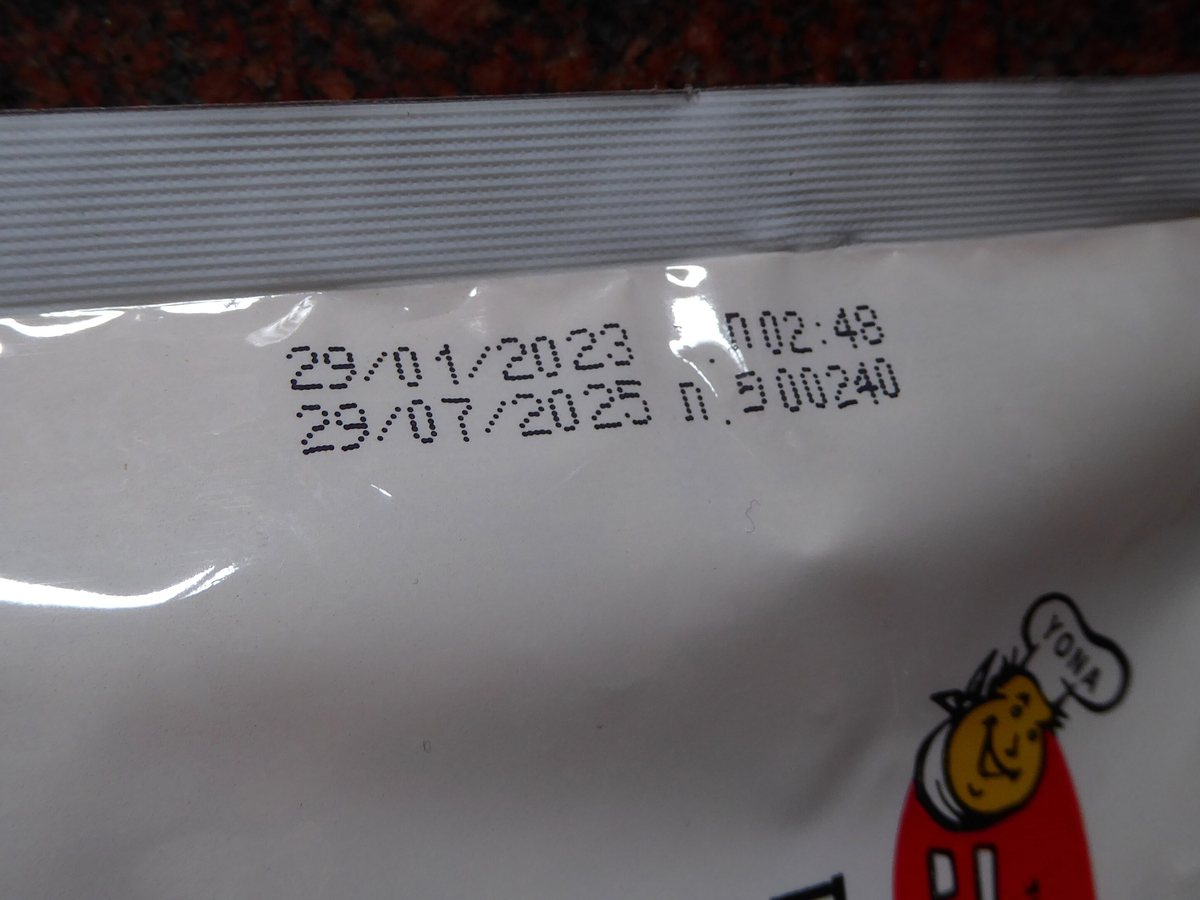

Two dates, two different messages
The rule is in Art. 13 of the Swiss ordinance on food information (LIV): as a rule, food carries a best-before date. If it is microbiologically highly perishable and could quickly become a direct danger to health, it carries a use-by date instead.
- “Mindestens haltbar bis” (best before, MHD): until this date, correctly stored food keeps its typical properties (LIV, Annex 1 no. 5). It is a promise about quality, not safety.
- “Zu verbrauchen bis” (use by): the food must be used by this date. After it, the food may no longer be supplied to consumers (LIV, Annex 1 no. 6).
The Federal Food Safety and Veterinary Office (BLV) puts it this way: many products are still fine after the best-before date if they look, smell and taste right. After the use-by date, a product may be neither supplied nor processed.
How to tell which date you have
According to LIV, Annex 8, the best-before date is introduced by “mindestens haltbar bis” or, if only the month or year is given, “mindestens haltbar bis Ende”. The use-by date is introduced by “zu verbrauchen bis”, with day, month and storage instructions. The use-by date must appear on every prepacked single portion.
foodwaste.ch gives typical examples. A best-before date is found on pasta, rice, coffee, oils, frozen products, UHT milk and hard cheese. A use-by date is found on packaged meat, fish, grated cheese and fresh ready meals. Some foods need no date at all: fresh, uncut fruit and vegetables (sprouts excepted), wine, vinegar, table salt, sugar, chewing gum and baked goods normally eaten within 24 hours (LIV, Annex 8 no. 1.4).
After the best-before date: look, smell, taste
After the best-before date, your senses decide. foodwaste.ch describes three levels: if the product looks, smells and tastes good, you can eat it. If it has changed only slightly, for example in colour or texture, that is no problem for your health. If you notice strong, unpleasant changes, leave it.
The Zurich University of Applied Sciences studied the leeway for the BLV (ZHAW, two guides from 2021). Based on this, foodwaste.ch gives, for example, these periods after the best-before date for correctly stored food:
- up to 360 days: pasta, rice, tea, coffee
- up to 120 days: fats, oils, muesli
- up to 90 days: frozen products
- up to 30 days: UHT milk, hard cheese, snacks
- up to 6 days: raw eggs, cakes and small baked goods
Tests for individual foods, such as eggs, yoghurt or mouldy cheese, are in the tool Haltbar oder nicht? and the article Reading best-before dates correctly. For using things up: Reste-Küche (leftovers kitchen).
After the use-by date: do not eat it
Germs such as salmonella can grow on use-by products, and you can neither see nor smell them (foodwaste.ch). Even if minced meat still looks normal, after the date it goes.
Freezing: in time, not afterwards
According to foodwaste.ch, fresh products with a use-by date that are suitable for freezing, such as packaged meat, fish or grated cheese, can be frozen up to the printed day and then used for another 90 days. The BLV suggests producers mark this on the pack, for example with a snowflake and the note “suitable for freezing before the use-by date”. As an example of instructions it gives: keeps 90 days at −18 °C, thaw in the fridge if possible, eat immediately after thawing and do not refreeze (BLV information letter 2025/4.1).
May shops and organisations still sell or donate after the best-before date?
Yes, with conditions. The BLV explains this in its information letter 2025/4.1 to the cantonal control authorities. Supplying food after the best-before date is allowed in principle, provided quality and safety are ensured and customers are not misled. This covers selling and donating.
- The ZHAW sets out “MHD+” limits: how long unopened, correctly stored products are generally still safe after the best-before date. For small baked goods and pasteurised milk this is 6 days, for pasta and tinned food up to one year.
- These periods do not replace checking: look and, where possible, smell and taste before handing food on. The duty of self-monitoring applies until the food is handed over.
- Bread without a date may also be handed on later if it is safe, but it should be clearly labelled, for example “von gestern” (from yesterday).
- A shop may freeze flawless products with a use-by date before the date: frozen through by the expiry day at the latest, with the freezing date and a best-before date of 90 days. After the use-by date, nothing may be supplied.
In a survey by foodwaste.ch at the end of 2025 among 72 shops selling products beyond the best-before date, over 95 per cent recommend extended selling to others.
And cooked food?
A dish from a restaurant kitchen has no printed best-before date. For cooked food, temperature, the cold chain and a clear deadline are what count. That is why the label in übrig shows the preparation time and deadline, and in the “Meldung” (notice) the kitchen confirms a “Zu verbrauchen bis”. With übrig, cooked food is meant only for night shelters and social institutions. The public fridges of Madame Frigo take no cooked food. The übrig tools are finished; the pilot has not started yet. More in Passing on food safely and Saving food in Bern.
Why it matters
In Switzerland, according to foodwaste.ch (figures from ZHAW and the Federal Office for the Environment, BAFU), 26 per cent of food losses occur in households. One reason: we misread the best-before date and do not check with our senses. For the EU, not Switzerland, the European Commission estimates that up to 10 per cent of food waste is linked to date marking. More figures on Switzerland and Bern: Food waste in Switzerland.
In short: best-before date passed means check it; use-by date passed means throw it away. This article is information, not legal advice. In the Canton of Bern, the binding authority is the Kantonales Laboratorium (cantonal food control).
Sources
- Ordinance on food information (LIV), SR 817.022.16
- BLV: Lebensmitteletikette (food label)
- BLV: information letter 2025/4.1 (PDF, German)
- ZHAW: two new guides on reducing food losses (2021)
- foodwaste.ch: Mindesthaltbarkeitsdatum und Verbrauchsdatum
- foodwaste.ch: shop survey on extended selling
- foodwaste.ch: facts and figures on food waste
- European Commission: date marking and food waste prevention
- Canton of Bern: Kantonales Laboratorium
Also worth reading
Passing on food safelyArticleHaltbar oder nicht?ToolSaving food in BernArticleReste-KücheToolübrig: check, label, logToolLong-life food and emergency supplyArticleText: Richard Červenka, Bärn Kit. Found a mistake? Write to hallo@uebrig.ch.