Natural History Museum Bern
The Natural History Museum at Bernastrasse 15 is Bern's oldest museum; its modernist building in the Neues Bauen style dates from 1932–1934.

Visiting
- Getting there
- Tram 6, 7, 8 or bus 19 to the stop “Helvetiaplatz”, then 220 metres.
- Open
- Monday 2 to 5 pm, Tuesday to Friday 9 am to 5 pm (Wednesday until 6 pm), Saturday and Sunday 10 am to 5 pm.
- Admission
- Adults CHF 12, children and young people up to 16 free.
- Access
- The whole museum is wheelchair-accessible.
- Tip
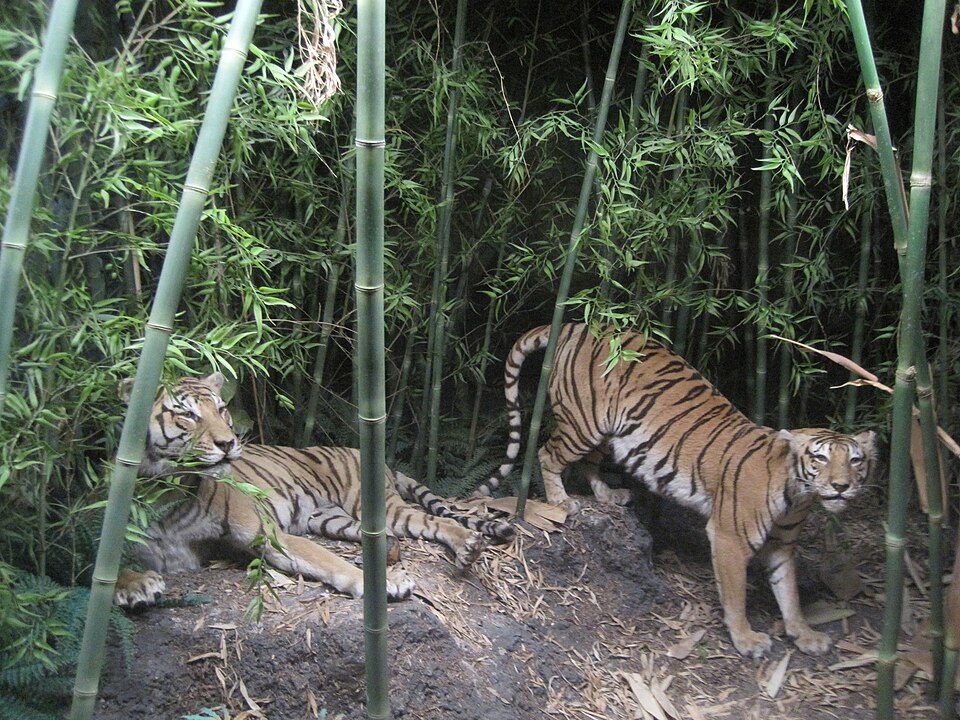
- Known for its dioramas with animals.
Checked 24 October 2026. Sources: Naturhistorisches Museum Bern – Planning your visit
- Address
- Bernastrasse 15
- Built
- 1932–1934 (building inventory); opened 4 January 1936 (Wikipedia); museum founded 1832
- Architect
- Krebs + Müller, Bern
- Style
- Neues Bauen (modernism)
- Today
- natural history museum of the Burgergemeinde of Bern
- Client
- Natural History Museum commission (Burgergemeinde Bern)
- Protection
- cultural property of national significance (KGS A), worthy of protection (Bauinventar)
About the building
On Bernastrasse in the Kirchenfeld quarter, between the Historical Museum and the National Library, stands a U-shaped building with a flat roof and regular rows of windows. It houses the Natural History Museum of Bern. Above the entrance the lecture hall projects as a cube, lit only by a high band of windows, and a base in a contrasting colour carries the whole. The building inventory counts it, together with the National Library and the building of the Schulwarte and Alpine Museum, among Bern's earliest public buildings in the formal language of the modernist Neues Bauen.
The collection is much older than the building. It began as a cabinet of curiosities set up in the city library at the end of the seventeenth century. For the growing holdings a gallery was added in 1773 to 1775, popularly known as the "Bird Library" because of the bird collection of the pastor Daniel Sprüngli. In 1832 the city council created a separate museum commission; this year counts as the founding date, which makes it Bern's oldest museum. With the division of the old state's assets in 1852, the Burgergemeinde became the sole owner of the collections. The museum later moved into a building by Albert Lanz on Hodlerstrasse.
Because the telegraph authority wanted the Hodlerstrasse site for an extension and paid a large sum for it, the Burgergemeinde was able to build anew on Bernastrasse. The plans were drawn by the Bern firm Krebs + Müller; according to the building inventory, the reinforced concrete frame building was put up from 1932 to 1934. The museum gives 1934 as the year of the move, while Wikipedia names 4 January 1936 as the opening. The building was designed around the dioramas, large display cases with painted backgrounds in which mounted animals are seen as if in their habitat. Extensions followed in 1937, 1959/60, 1970/71 and 1994/95 without blurring the character of the original.
Today the collection comprises around 6.5 million items, most of them invertebrates. Among the best-known pieces are the St Bernard dog Barry, to whom an exhibition of its own is dedicated, and the giant crystals from Planggenstock. The museum belongs to the Burgergemeinde of Bern and does research in close cooperation with the University of Bern, including on meteorites, spiders and snails. Walking round the building, look at the north facade: a grid of staggered windows shows where the staircase runs.
Researched and summarised by Bärn Kit. Sources: Bauinventar der Stadt Bern: Bernastrasse 15 · Naturhistorisches Museum Bern: History (It all began with a Bird Library) · Wikipedia (de): Naturhistorisches Museum Bern · Wikipedia (en): Natural History Museum of Bern · Wikidata: Q1286799
Buildings nearby
Stately apartment house at Aegertenstrasse 150 mMuseum of Communication70 mDouble villa at Aegertenstrasse 7/980 mApartment house at Bernastrasse 10100 mSwiss Shooting Museum110 mStrawberry Mareili (Erdbeer-Mareili)Artwork · 60 mOrbitArtwork · 60 mSusanna BathingArtwork · 60 mMore sights in Bern
Zentrum Paul KleeMuseumsKunstmuseum BernMuseumsBern Historical MuseumMuseumsClassification and address: Bauinventar © Amt für Kultur des Kantons Bern · Object sheet (PDF, German) · Wikidata. Found a mistake? Write to hallo@uebrig.ch.