Freezing and thawing: how to keep your food safe
Freezing is one of the easiest ways to save food. It stays safe if the temperature is right, if you thaw it the right way and if you never refreeze what has thawed.
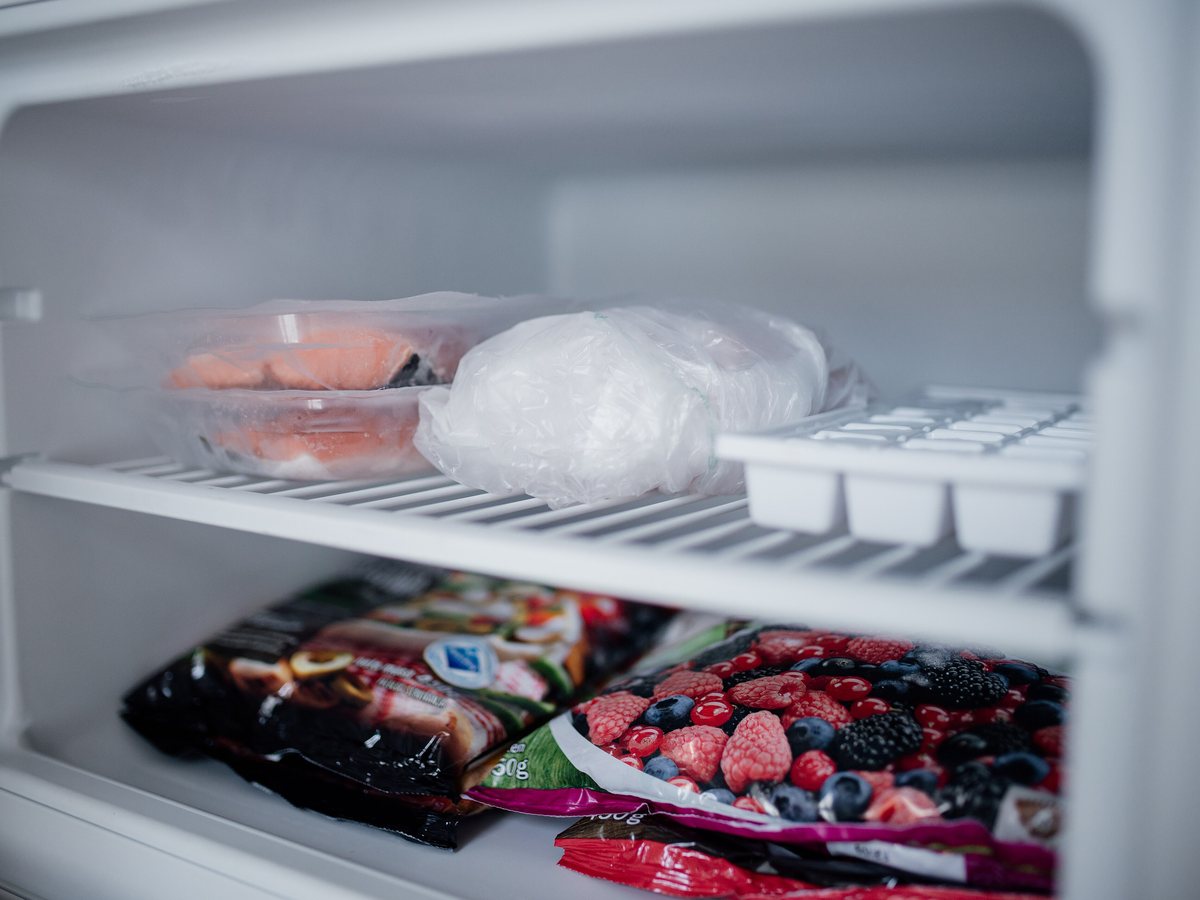

What freezing can and cannot do
Cold slows germs down. According to foodwaste.ch, frozen products are cooled quickly to below −18 °C during production. This slows down microorganisms and the enzymes that make food spoil.
But cold does not kill germs. The European Food Safety Authority (EFSA) wrote in a news release of 22 April 2021: freezing stops bacteria from growing. During thawing, however, they can recover and multiply to levels that make people ill. So the risky part is thawing, not freezing.
−18 °C and well wrapped
According to foodwaste.ch, the ideal storage temperature for frozen products is −18 °C or below. The Kantonales Laboratorium Bern (the cantonal food control laboratory) gives the same value in its template for childcare centres: store frozen products at −18 °C or colder. This keeps the temperature stable:
- Straight after shopping: according to the BLV (Federal Food Safety and Veterinary Office), frozen products go into the freezer straight away.
- Wrap airtight: keep food in its original packaging or move it into tight containers. This protects it from moisture, air and freezer burn (foodwaste.ch).
- Do not overfill: in a full freezer it takes longer for a product to freeze through.
- Away from the door: that is where the temperature varies most. Even small changes form ice crystals and alter taste and texture.
What you can freeze
“You can freeze almost all foods”, writes foodwaste.ch, milk included. Some foods change their structure when they thaw, though. They are safe, but may be softer or more watery.
You can freeze leftovers too. foodwaste.ch advises: put leftovers into tight containers, get them into the fridge quickly and eat them soon or freeze them. Freeze portions you will use in one go. Then you never thaw more than you eat.
Before the use-by date: 90 more days
You must not eat food marked “zu verbrauchen bis” (use by) after that date. Until that day, however, you can freeze suitable products, according to foodwaste.ch for example packaged meat, fish, grated cheese and ready meals. Once frozen, you can still eat them for 90 days.
In its information letter 2025/4.1, the BLV describes how manufacturers can show this on the pack: with the note “Zum Einfrieren geeignet vor Ablauf des Verbrauchsdatums” (suitable for freezing before the use-by date) or with a snowflake. As an example of the instructions, the BLV gives: keeps for 90 days at −18 °C from the freezing date, thaw in the fridge if possible, eat straight after thawing and do not refreeze. To check whether something is still good after its date, use Haltbar oder nicht? (keeps or not?).
Label and keep track
Food easily gets forgotten in the freezer. foodwaste.ch suggests hanging a list of your frozen stock where you can see it. Defrost the freezer regularly and tidy up while you do. If it is tidy, you do not need to keep the door open for long. Write on every box what is inside and when you froze it. For products frozen before their use-by date, you then know when the 90 days are up.
Thawing the right way
Microorganisms multiply fastest between 10 and 50 °C, writes the Kantonales Laboratorium Basel-Stadt in its leaflet on temperature control (May 2026). A piece of food does not thaw equally fast in all its layers. That is why thawing should be controlled. The leaflet lists these methods:
- In the fridge: put unpackaged food in a clean container with a drip insert and cover it. Pour away the thawing liquid and wash the container thoroughly.
- In cold water: only food in tight packaging.
- Quickly: in the microwave or a fan oven.
The EFSA also advises thawing at low temperatures, for example in the fridge. Thawed food stays in its original packaging or a clean container. Heat ready meals as the pack says, so that they get evenly hot (foodwaste.ch). When you reheat thawed leftovers, heat them to 70 degrees again, says the BLV.
Once thawed: do not refreeze
On this, all sources agree. The BLV writes: do not refreeze thawed food. The EFSA and the Kantonales Laboratorium Basel-Stadt say the same. The reason: germs may already have multiplied during thawing. Freezing a second time only stops them again. It does not make the food any safer. So plan to eat thawed food soon.
For kitchens, canteens and clubs
Businesses have stricter duties. According to the Basel leaflet, for example, thawed food is labelled with the thawing date so that its path can be traced. According to the BLV, shops that freeze products before the use-by date must have them frozen through by the use-by day at the latest and label them with the freezing date and a best-before date of 90 days. Appearance and, where possible, smell and taste must still be checked before the food is handed out. How to check the temperature in your fridge is explained in Organising your fridge.
If you pass food on, for example at a party or from a canteen, further rules apply. They are in Passing on food safely. With the free tool übrig you go through seven hygiene questions before you pass on a dish, and you keep a log. Everything stays in your browser, with no account.
This article is information, not legal advice. The Basel leaflet applies to the Canton of Basel-Stadt. In the Canton of Bern, the binding authority is the Kantonales Laboratorium (food control).
Sources
- EFSA: EFSA advises food suppliers on information for consumers (22 April 2021): bacteria recover during thawing, thaw in the fridge, do not refreeze.
- BLV: Hygiene im Umgang mit Lebensmitteln (food hygiene, German): put frozen food away at once, do not refreeze, 70 degrees.
- BLV: Informationsschreiben 2025/4.1 (information letter, PDF, German): freezing before the use-by date, 90 days, snowflake.
- foodwaste.ch: Fertigprodukte tiefgekühlt (frozen ready meals, German): −18 °C, packaging, freezer burn, list, defrosting.
- foodwaste.ch: Mindesthaltbarkeitsdatum und Verbrauchsdatum (best before and use by, German): 90 more days when frozen before the use-by date.
- foodwaste.ch: Ekel, Mythen und wahre Gefahren (myths and real risks, German): almost everything can be frozen, milk included.
- foodwaste.ch: 5 Schritte gegen Food Waste (five steps against food waste, German): leftovers in tight containers, eat soon or freeze.
- Kantonales Laboratorium Basel-Stadt: Merkblatt Erhitzen, Warmhalten, Abkühlen, Auftauen (leaflet, May 2026, PDF, German): 10 to 50 °C, thawing methods, thawing date.
- Kantonales Laboratorium Bern: Muster-Dokumentation Selbstkontrolle für Kitas (template for childcare centres, Word, German): frozen products at −18 °C or colder.
- Canton of Bern: Kantonales Laboratorium: food control authority.
Also worth reading
Organising your fridgeArticleBest before or use by?ArticleHaltbar oder nicht? (keeps or not?)ToolReste-Küche (leftovers kitchen)ToolText: Richard Červenka, Bärn Kit. Found a mistake? Write to hallo@uebrig.ch.