Food waste in Switzerland: how much is lost, where, and what it means for Bern
In Switzerland, around a third of edible food is lost somewhere between the field and the plate. Here is where it happens, what the federal government is doing about it and what it means for Bern.
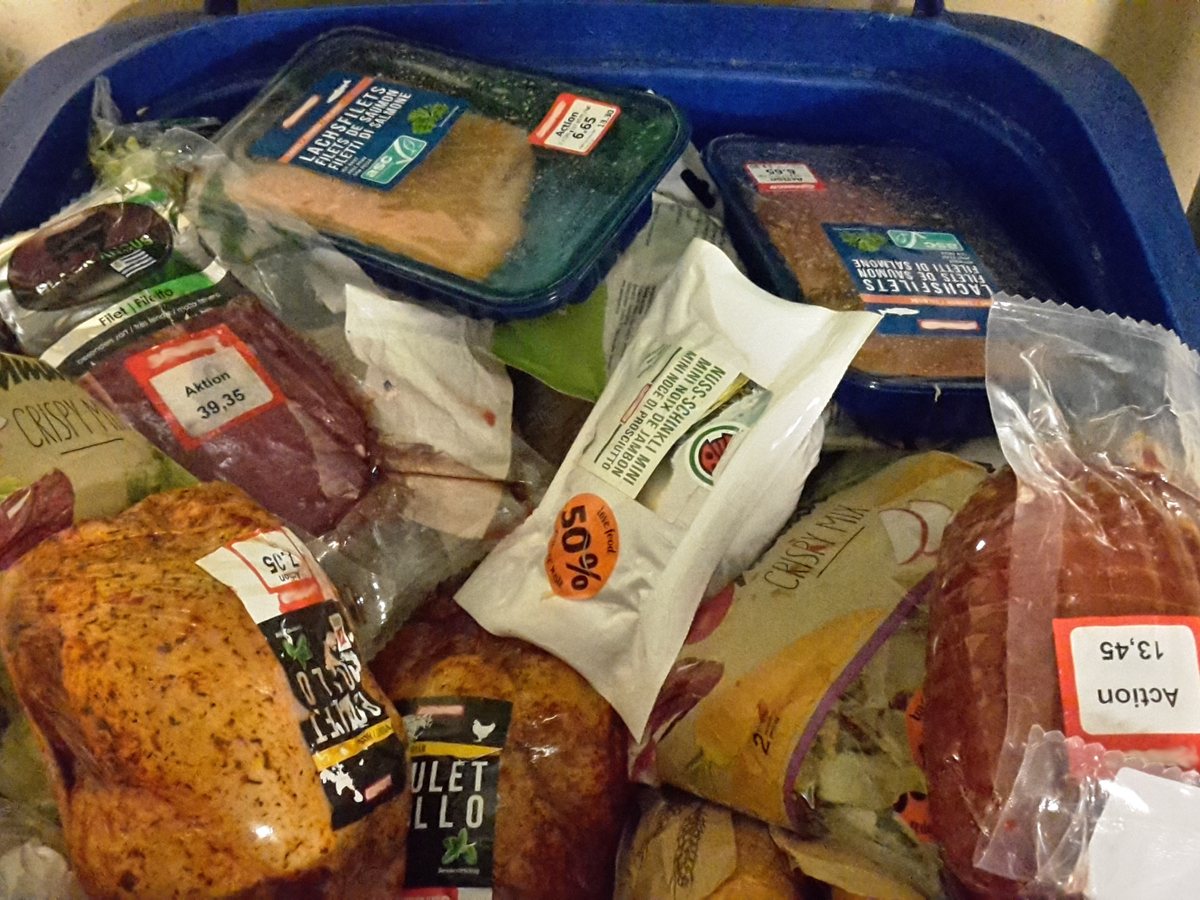

The big number: 2.8 million tonnes
According to the Bundesamt für Umwelt (BAFU, Federal Office for the Environment), around a third of the edible parts of food is lost or wasted between field and plate. For what Switzerland consumes, that is around 2.8 million tonnes a year. In 2017 it was around 330 kg per person; the estimate for 2024 is 310 kg per person per year, across all stages (2025 interim report by ZHAW and BAFU).
This means avoidable losses: edible parts of food that were produced for people but not eaten by people. According to BAFU, 25 per cent of the environmental impact of our diet comes from these losses. If Switzerland halved them, the environmental impact and greenhouse gas emissions of food would fall by 10 to 15 per cent.
Where in the chain food is lost
The report by ZHAW and BAFU estimates these amounts for 2024. For agriculture and processing, they are 2017 figures scaled up to today's population.
- Agriculture: around 590 000 tonnes, 14% of the environmental impact
- Processing: around 1.03 million tonnes, 29%
- Trade: around 270 000 tonnes, 9%
- Food service: around 190 000 tonnes, 13%
- Households: around 720 000 tonnes, 35%
The largest amount arises in processing, the largest environmental impact in households. foodwaste.ch says each person throws away around 80 kg of food a year at home, worth around 600 francs.
Food service: a small share, a big lever
In restaurants, canteens and care homes, the report says 10 to 20 per cent of the food bought is lost, about as much as in private households. Losses are measured in three groups: kitchen and storeroom (overproduction, spoilage), guests (plate leftovers, bread from the table) and preparation waste (peel, stalks).
Eleven companies with 872 sites measured their losses in 2024. They were at around 66 grams per main meal, about half the 2017 estimate (127 grams). But these businesses cover only 5 to 7 per cent of the market. For the sector as a whole, the report estimates a reduction of 4 to 14 per cent. According to BAFU, progress in retail and food service was greatest where companies measure their losses.
What the federal government is doing, and where it stands
On 6 April 2022 the Federal Council launched an action plan against food waste. The goal: halve avoidable losses by 2030 compared with 2017. On 12 May 2022 the federal government and 28 leaders of companies and associations signed a cross-sector agreement. According to the interim report of May 2026, 37 companies and organisations take part.
The interim results are sobering. From 2017 to 2024 losses fell by around 5 per cent. To halve them by 2030, a cut of around 25 per cent would have been needed by 2025. Because the population grew by almost 7 per cent at the same time, the total stayed at about 2.8 million tonnes. Retail has made the most progress, with around 20 per cent less loss. For households, the 2024 estimate is around 13 per cent lower than in 2017, but the report does not yet see a clear trend.
On 6 May 2026 the Federal Council approved the interim report. It continues to rely on voluntary action and wants more players on board, better data and more awareness in households. The next report follows in 2028.
And Bern?
In the sources we checked, we found no separate figures for the City or the Canton of Bern. The Swiss figures apply here too. In December 2024 the City of Bern adopted its Konzept Nachhaltige Ernährung (sustainable food concept). One of its six fields of action is called “Lebensmittelverluste und Entsorgung” (food losses and disposal). According to the concept, the city has the greatest potential in its own catering, for example in day-care centres and day schools.
In everyday life, this means:
- At home: In the City of Bern, food leftovers may go into the green container along with garden waste and peelings.
- In restaurants and canteens: Stricter rules apply to commercial kitchens: they may not use the city's green waste collection and need private disposal firms. That can be expensive, so according to the concept, food leftovers from businesses are mostly incinerated.
The city follows this order: first avoid overproduction, then use food for people, then as animal feed, then in a biogas or composting plant. Incineration comes last.
What you can do
At home: foodwaste.ch names five steps: shop smart, store food well, read date labels correctly, cook creatively and use everything, share food. For dates, Haltbar oder nicht? (still good or not?) helps, as does our article on best-before and use-by dates. For leftovers there is the Reste-Küche (leftovers kitchen).
In a kitchen: Measure what is left over, in the three groups above, for at least four weeks a year as the sector guideline says. What is still left over may be passed on under certain conditions. How to do that safely is explained in Passing on food safely and in the checklist for restaurants and canteens.
übrig is a free tool from Bern for kitchens, in the browser and without an account: seven hygiene questions, a label, a log. The pilot has not started yet. Cooked food is meant only for Notschlafstellen (night shelters) and social institutions, such as the Gassenküche or Punkt 6. Madame Frigo's public fridges take no cooked food. Where else you can save food in Bern: Saving food in Bern.
Sources
- BAFU: Lebensmittelverluste (food losses): a third, 2.8 million tonnes, environmental impact, 2022 agreement.
- Beretta et al. (2025): Zwischenstandsbericht 2025, ZHAW for BAFU (PDF, German): amounts per stage, food service, reduction since 2017.
- Federal Council, 6 April 2022: Bundesrat startet Aktionsplan: halving goal.
- BAFU, 6 May 2026: Zwischenbericht zum Aktionsplan: Federal Council decision, 37 participants.
- foodwaste.ch: Zahlen und Fakten: households.
- foodwaste.ch: 5 Schritte gegen Food Waste: tips.
- City of Bern: green container: food leftovers from households.
- City of Bern, 13 December 2024: Konzept Nachhaltige Ernährung verabschiedet: fields of action.
- City of Bern: Konzept Nachhaltige Ernährung (PDF): disposal by businesses, order of use.
Also worth reading
Passing on food safelyArticleBest before or use by?ArticleSaving food in BernArticleReste-Küche (leftovers kitchen)Toolübrig: check, label, logToolText: Richard Červenka, Bärn Kit. Found a mistake? Write to hallo@uebrig.ch.